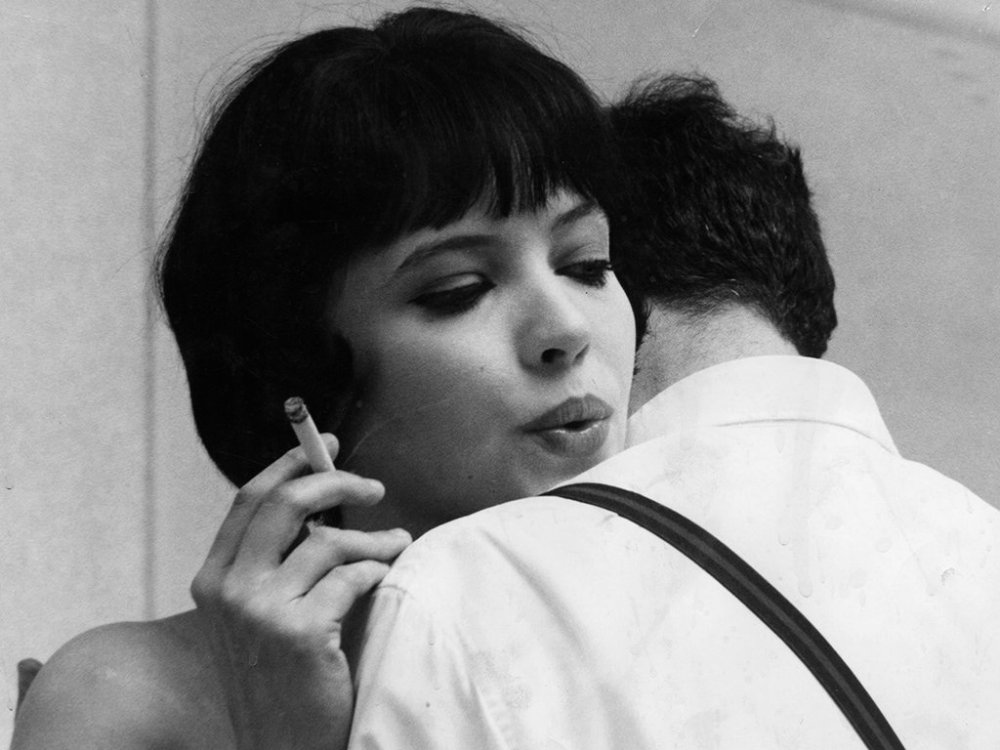
FRENCH NEW WAVE (NOUVELLE VAGUE)
- During WW2 (1939 to 1945) France was occupied by Germany
- All foreign films were banned, including much loved American genre films.
- All French films had to be approved by the German censor, leading to a decline in quality from the great French films of the 1920s/30s.
- Following liberation, nearly a decade’s worth of films poured into France. leading to a boom in film criticism.
CASHIERS DU CINEMA
- A film periodical formed in 1951
- Writers included Jean Luc Godard, Francois Truffaut, Eric Rohmer, Claude Chabrol
- The Cinematheque Francais and the cahiers row.
- Writers developed the auteur theory- the director as the prime author of the film.
- They felt that it was through mise en scene that a director could create a personal vision, raiding. B-movie material to a personal film.
- In 1954 Francois Truffautbwrite an influential essay for Cahiers du Cinema called “A Certain Tendency in French Cinema.”
- He coined the term cinema du papa- Grandads cinema
- He felt cinema should reflect the lives of young people.
WHAT FACTORS LED TO THE NEW WAVE?
- The government introduced subsidies to support the French culture. filmmakers could borrow money and make a movie. only if the film made good money, would they have to pay it back.
- New light weight cameras, sounds and lights
- Faster film stocks needed less light
- Possible to shoot a film away from a studio
- Camera Stylo- Directors could use the camera like an author used a pen
- This encouraged experimentation, improvisation- greater artistic freedom.
KEY NEW WAVE FILMS
- The French New Wave began at the end of the 1950s and ran into the mid-1960s.
- A Bout de Souffle (Godard, 1959)
- Le Quatres Cent Coups (Truffaut, 1959)
- Cleo from 5 to 7 (Varda, 1962)
- Hirosima Mon Amour (Renais, 1959)
HOW DID LOCATION FILMING AFFECT THE LOOF OF LOOK OF FILMS?
- Available light was preferred to studio-style lighting and available sound was preferred to extensive studio dubbing.
- The camera was often very mobile, with a great deal of fluid panning and tracking.
- Often only one camera was used, in highly inventive ways; following characters down streets, into cafes and bars, or looking over their shoulders to watch life go by.
- “Camera Stylo”
HOW DID EXISTENTIALISM INFLUENCE THE NEW WAVE?
- Associated with Jean-Paul Sartre, existentialism stressed the individual, free choice, the absence of any rational understanding of the universe and a sense of the absurdity in human life.
- An existentialist seeks to act authentically instead of playing pre-ordained roles dictated by society.
- Characters in French New Wave films are often marginalized, young anti-heroes and loners, with no family ties, who behave spontaneously, often act immorally and are frequently seen as anti-authoritarian.
- In A Bout de Souffle (1959) the protagonist kills and shows no remorse
- In Varda’s Cléo de 5 á 7 (1961) the protagonist stops playing the roles others expect of her, when she discovers she has cancer, and starts to live authentically.
HOW WERE ACTORS USED DIFFERENTLY?
- Associated with Jean-Paul Sartre, existentialism stressed the individual, free choice, the absence of any rational understanding of the universe and a sense of the absurdity in human life.
- An existentialist seeks to act authentically instead of playing pre-ordained roles dictated by society.
- Characters in French New Wave films are often marginalized, young anti-heroes and loners, with no family ties, who behave spontaneously, often act immorally and are frequently seen as anti-authoritarian.
- In A Bout de Souffle (1959) the protagonist kills and shows no remorse
- In Varda’s Cléo de 5 á 7 (1961) the protagonist stops playing the roles others expect of her, when she discovers she has cancer, and starts to live authentically.
FRENCH NEW WAVE CINEMA WAS A PERSONAL CINEMA
- The film-makers were writers who were skilful at examining relationships and telling humane stories.
- Truffaut’s films were particularly autobiographical. His first full-length film Les Quatre Cents Coups drew upon his early life as a juvenile delinquent.
- New Wave directors used the camera for personal expression, not to satisfy genre conventions.

 Akira's Media Blog