
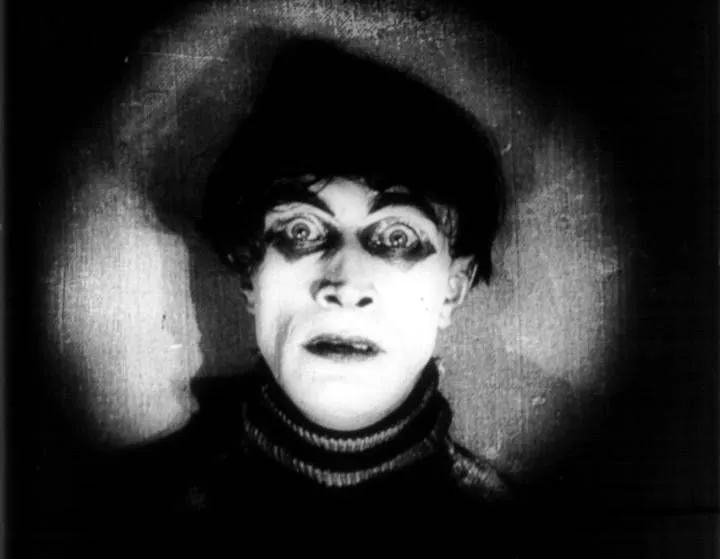
Expressionism- a manner of drawing, painting or sculpting in which forms derived from nature are distorted or exaggerated and colours are intensified for emotive or expressive purposes.
A film movement that was influential between 1910 and 1930. It was part of a larger expressionist movement in Europe covering: sculpture, architecture, dance and painting. It reached its peak in Berlin in the 1920s
World War 1
1914-1918
- German government banned all foreign films in 1916, leading to a dramatic increase in German film production.
- Germany produced 24 films in 1914, 130 films in 1918.
- WW1 resulted in reduced appetite for romance and action films.
Style: The films and the art of the expressionist period represented the gruesome truth that the people of Germany dealt with. The movies captured the emotions and sufferings of the broken nation and its people.
Key Idea: German Expressionism portrays a subjective, emotional world rather than an objective reality.
Key Themes: Common themes include insanity, death, fatality and the supernatural. The plots often revolve around murder and the occult.
Stylized Mise en Scene; It rejects realism in favour of extreme distortion used to communicate inner emotional reality. Heavy stylization is symbolic of the real world rather than a realistic depiction of it.
- Distorted shapes and lines that upset the sense of balance.
- Suggests a warped and perverted perspective on the world.
- A reflection of the twisted emotional state of the storyteller.
Lighting: Chiaroscuro lighting creates dramatic contrasts between light and shadow, suggesting presence of dark aspects in human nature. Elongated shadows envelope and haunt the characters. Shadows are also used to reveal characters actions, suggesting their dark intent.
Make Up & Performance: Gothic make up and clothing and exaggerated movements as further distortions of reality, suggesting ill psychological states.
Integrated Aesthetic: Movements carefully choreographed to create specific shapes and shadows. Integrated with mise-en-scene to create an overall graphic composition.
Influence on Subsequent Film Makers:
- Universal Studios Horror
- 1930s and 1940s
- Influence of German directors escaping Nazism, e.g.; Frankenstein
- Film Noir Genre
- 1940s and 1950s, e.g. The Big Hear
- Has influenced movies such as Edward Scissorhands by Tim Burton 1991.

 Akira's Media Blog