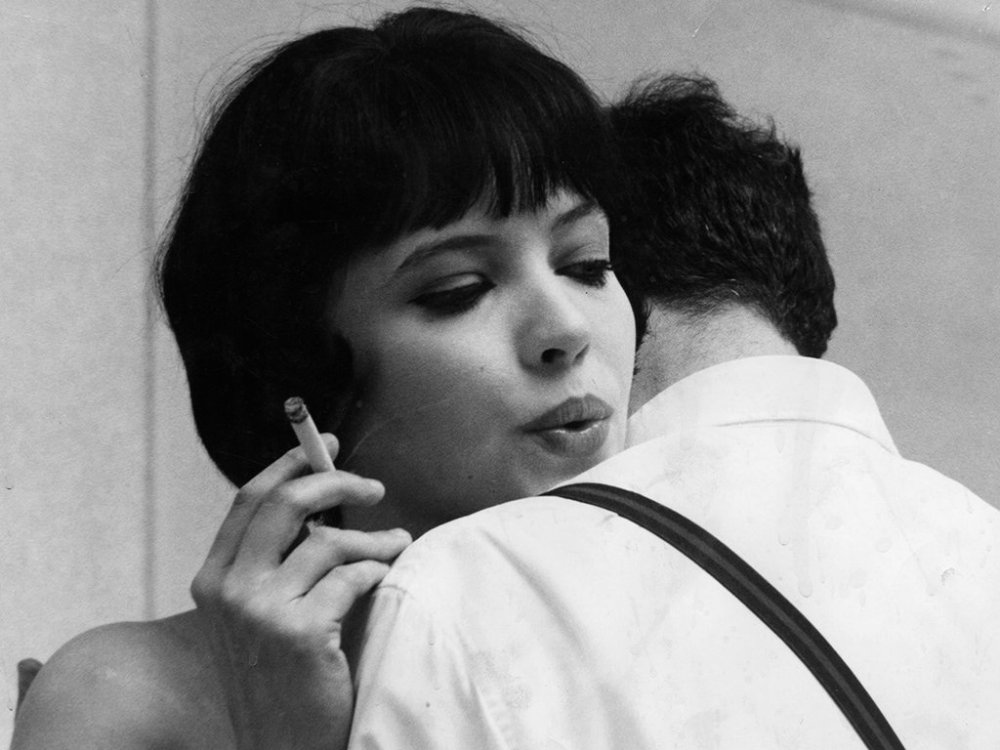
FRENCH NEW WAVE (NOUVELLE VAGUE)
- During WW2 (1939 to 1945) France was occupied by Germany
- All foreign films were banned, including much loved American genre films.
- All French films had to be approved by the German censor, leading to a decline in quality from the great French films of the 1920s/30s.
- Following liberation, nearly a decade’s worth of films poured into France. leading to a boom in film criticism.
CASHIERS DU CINEMA
- A film periodical formed in 1951
- Writers included Jean Luc Godard, Francois Truffaut, Eric Rohmer, Claude Chabrol
- The Cinematheque Francais and the cahiers row.
- Writers developed the auteur theory- the director as the prime author of the film.
- They felt that it was through mise en scene that a director could create a personal vision, raiding. B-movie material to a personal film.
- In 1954 Francois Truffautbwrite an influential essay for Cahiers du Cinema called “A Certain Tendency in French Cinema.”
- He coined the term cinema du papa- Grandads cinema
- He felt cinema should reflect the lives of young people.
WHAT FACTORS LED TO THE NEW WAVE?
- The government introduced subsidies to support the French culture. filmmakers could borrow money and make a movie. only if the film made good money, would they have to pay it back.
- New light weight cameras, sounds and lights
- Faster film stocks needed less light
- Possible to shoot a film away from a studio
- Camera Stylo- Directors could use the camera like an author used a pen
- This encouraged experimentation, improvisation- greater artistic freedom.
KEY NEW WAVE FILMS
- The French New Wave began at the end of the 1950s and ran into the mid-1960s.
- A Bout de Souffle (Godard, 1959)
- Le Quatres Cent Coups (Truffaut, 1959)
- Cleo from 5 to 7 (Varda, 1962)
- Hirosima Mon Amour (Renais, 1959)
HOW DID LOCATION FILMING AFFECT THE LOOF OF LOOK OF FILMS?
- Available light was preferred to studio-style lighting and available sound was preferred to extensive studio dubbing.
- The camera was often very mobile, with a great deal of fluid panning and tracking.
- Often only one camera was used, in highly inventive ways; following characters down streets, into cafes and bars, or looking over their shoulders to watch life go by.
- “Camera Stylo”
HOW DID EXISTENTIALISM INFLUENCE THE NEW WAVE?
- Associated with Jean-Paul Sartre, existentialism stressed the individual, free choice, the absence of any rational understanding of the universe and a sense of the absurdity in human life.
- An existentialist seeks to act authentically instead of playing pre-ordained roles dictated by society.
- Characters in French New Wave films are often marginalized, young anti-heroes and loners, with no family ties, who behave spontaneously, often act immorally and are frequently seen as anti-authoritarian.
- In A Bout de Souffle (1959) the protagonist kills and shows no remorse
- In Varda’s Cléo de 5 á 7 (1961) the protagonist stops playing the roles others expect of her, when she discovers she has cancer, and starts to live authentically.
HOW WERE ACTORS USED DIFFERENTLY?
- Associated with Jean-Paul Sartre, existentialism stressed the individual, free choice, the absence of any rational understanding of the universe and a sense of the absurdity in human life.
- An existentialist seeks to act authentically instead of playing pre-ordained roles dictated by society.
- Characters in French New Wave films are often marginalized, young anti-heroes and loners, with no family ties, who behave spontaneously, often act immorally and are frequently seen as anti-authoritarian.
- In A Bout de Souffle (1959) the protagonist kills and shows no remorse
- In Varda’s Cléo de 5 á 7 (1961) the protagonist stops playing the roles others expect of her, when she discovers she has cancer, and starts to live authentically.
FRENCH NEW WAVE CINEMA WAS A PERSONAL CINEMA
- The film-makers were writers who were skilful at examining relationships and telling humane stories.
- Truffaut’s films were particularly autobiographical. His first full-length film Les Quatre Cents Coups drew upon his early life as a juvenile delinquent.
- New Wave directors used the camera for personal expression, not to satisfy genre conventions.







 Karl Marx and Friedrich Engels (German immigrants living in Britain) developed Marxism in the early to mid-19th century. For Marxists, Capitalism (through ideology and force) leads to oppression and exploitation of proletariat (majority/working classes- anyone who sells their labour for money) by the bourgeoisie (wealthy ruling class who own the means of production/minority.

 Akira's Media Blog