FRENCH NEW WAVE (NOUVELLE VAGUE)

10 great French New Wave films | BFI

FRENCH NEW WAVE (NOUVELLE VAGUE)

  • During WW2 (1939 to 1945) France was occupied by Germany
  • All foreign films were banned, including much loved American genre films.
  • All French films had to be approved by the German censor, leading to a decline in quality from the great French films of the 1920s/30s.
  • Following liberation, nearly a decade’s worth of films poured into France. leading to a boom in film criticism.


CASHIERS DU CINEMA

  • A film periodical formed in 1951
  • Writers included Jean Luc Godard, Francois Truffaut, Eric Rohmer, Claude Chabrol
  • The Cinematheque Francais and the cahiers row.
  • Writers developed the auteur theory- the director as the prime author of the film.
  • They felt that it was through mise en scene that a director could create a personal vision, raiding. B-movie material to a personal film.
  • In 1954 Francois Truffautbwrite an influential essay for Cahiers du Cinema called “A Certain Tendency in French Cinema.”
  • He coined the term cinema du papa- Grandads cinema
  • He felt cinema should reflect the lives of young people.


WHAT FACTORS LED TO THE NEW WAVE?

  • The government introduced subsidies to support the French culture. filmmakers could borrow money and make a movie. only if the film made good money, would they have to pay it back.
  • New light weight cameras, sounds and lights
  • Faster film stocks needed less light
  • Possible to shoot a film away from a studio
  • Camera Stylo- Directors could use the camera like an author used a pen
  • This encouraged experimentation, improvisation- greater artistic freedom.


KEY NEW WAVE FILMS

  • The French New Wave began at the end of the 1950s and ran into the mid-1960s.
  • A Bout de Souffle (Godard, 1959)
  • Le Quatres Cent Coups (Truffaut, 1959)
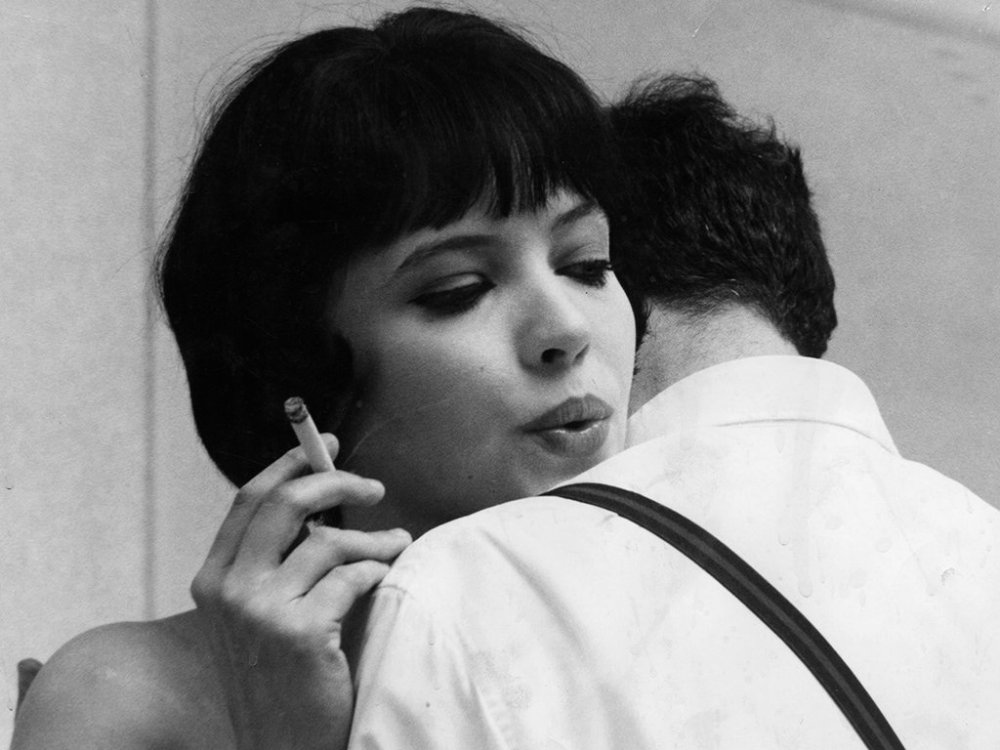
  • Cleo from 5 to 7 (Varda, 1962)
  • Hirosima Mon Amour (Renais, 1959)

HOW DID LOCATION FILMING AFFECT THE LOOF OF LOOK OF FILMS?

  • Available light was preferred to studio-style lighting and available sound was preferred to extensive studio dubbing.
  • The camera was often very mobile, with a great deal of fluid panning and tracking.
  • Often only one camera was used, in highly inventive ways; following characters down streets, into cafes and bars, or looking over their shoulders to watch life go by.
  • “Camera Stylo”

HOW DID EXISTENTIALISM INFLUENCE THE NEW WAVE?

  • Associated with Jean-Paul Sartre, existentialism stressed the individual, free choice, the absence of any rational understanding of the universe and a sense of the absurdity in human life.
  • An existentialist seeks to act authentically instead of playing pre-ordained roles dictated by society.
  • Characters in French New Wave films are often marginalized, young anti-heroes and loners, with no family ties, who behave spontaneously, often act immorally and are frequently seen as anti-authoritarian.
  • In A Bout de Souffle (1959) the protagonist kills and shows no remorse
  • In Varda’s Cléo de 5 á 7 (1961) the protagonist stops playing the roles others expect of her, when she discovers she has cancer, and starts to live authentically.

HOW WERE ACTORS USED DIFFERENTLY?

  • Associated with Jean-Paul Sartre, existentialism stressed the individual, free choice, the absence of any rational understanding of the universe and a sense of the absurdity in human life.
  • An existentialist seeks to act authentically instead of playing pre-ordained roles dictated by society.
  • Characters in French New Wave films are often marginalized, young anti-heroes and loners, with no family ties, who behave spontaneously, often act immorally and are frequently seen as anti-authoritarian.
  • In A Bout de Souffle (1959) the protagonist kills and shows no remorse
  • In Varda’s Cléo de 5 á 7 (1961) the protagonist stops playing the roles others expect of her, when she discovers she has cancer, and starts to live authentically.

FRENCH NEW WAVE CINEMA WAS A PERSONAL CINEMA

  • The film-makers were writers who were skilful at examining relationships and telling humane stories.
  • Truffaut’s films were particularly autobiographical. His first full-length film Les Quatre Cents Coups drew upon his early life as a juvenile delinquent.
  • New Wave directors used the camera for personal expression, not to satisfy genre conventions.

SOVIET MONTAGE

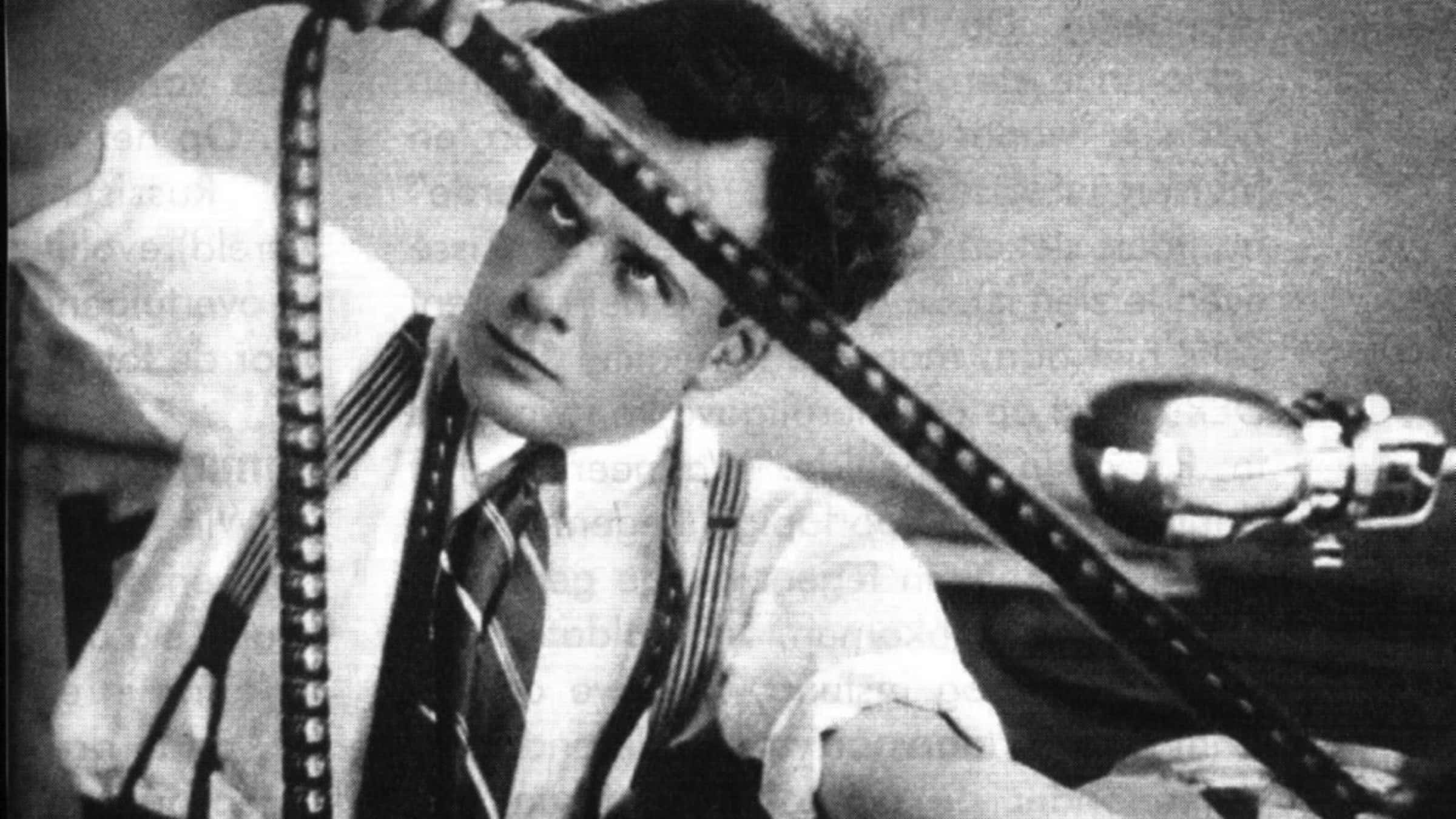
Soviet Montage Theory — Definition, Examples and Types of Montage

WHAT WAS THE HISTORICAL CONTEXT?

  • Russian Revolution in 1917, The Bolsheviks overthrew the Tsar to establish Communism.
  • Needed to consolidate power and communicate their ideas to a huge country.
  • Film a new medium that could communicate to the masses.
  • Films to be used as:
  • Propaganda to explain the ideas of the Communist party
  • Agitate the population to join and support the party
  • Agitation + Propaganda = Agitprop

HOW DID SOVIET FILM THEORY DEVELOP?

  • Founding of the worlds first film school in Moscow.
  • Aim was to train film makers to produce Agitprop films.
  • Lev Kuleshov led workshops sessions where D.W. Griffith’s film “Intolerance” was studied in detail.
  • Lack of available film stock led them to re-edit the film as an experiment, rather than shooting their own material
  • He became interested in montage (editing) as a way of creating meaning.

WHAT IS THE KULESHOV EFFECT?

  • Having experimented with Intolerance, Kuleshov realized that reordering shots could change their meaning.
  • He conducted an experiment, inter cutting shots of an actor with shots of:
  • A hot bowl of soup
  • A child in a coffin
  • An attractive woman
  • Viewers interpreted the actor’s expression as hungry, grief-stricken and aroused respectively, even though it was the same shot each time.

HOW WAS MONATGE USED TO CREATE AGITPROP?

  • Montage was a useful way to communicate meaning:
  • Cinema was silent so films needed to communicate without dialogue.
  • Intertitles were also no good as the population were mostly illiterate.
  • Another film maker, Sergei Eisenstein, used the principles of montage to create films that would persuade viewers to support the Bolsheviks.
  • His film “Battleship Potemkin” contains a famous sequence in which Tsarist soldiers massacre a crowd of unarmed civilians.

WHAT ARE EISENTEINS 5 TYPES OF MONTAGE?

  1. Metric Montage

Cutting according to a regular, specific number of frames, no matter what is happening in the shot.

  1. Rhythmic Montage

Cutting according to the content of the shots. Creates smooth visual continuity between shots.

  1. Tonal Montage

Cutting according to emotional tone of the shots. Shots of a sleeping baby suggest a calm tone, requiring less frequent cuts.

  1. Overtonal Montage 

Considering the use of the previous three kinds of cutting when assembling longer sequences.

  1. Intellectual Montage

Intercutting images unrelated in continuity to suggest ideas and/or concepts.


Creative Geography- Montage could be used to create imaginary spaces that could not exist in real life. In a scene from Just a Gigolo, David Bowie and Marlene Dietrich shot their parts a month apart in different rooms but editing is used to try to create the illusion that they are interacting in the same space.

SURREALISM

Surrealist Cinema and the Avant-Garde – Facets Features

Key Surrealist Films:

  • The first Surrealist film usually considered to be The Seashell and the Clergyman from 1928, directed by Germaine Dulac.
  • Luis Buñuel’s Un Chien Andalou, in collaboration with Salvador Dalí, in 1929.
  • Dalí collaborated with Buñuel again on L’Age D’Or in 1930,
  • Dalí was later hired by Alfred Hitchcock to create a Surrealist dream sequence in Spellbound (1945).
  • Some consider Luis Bunuel to be the only genuiely surrealist film maker.

Contemporary Surrealists:

  • Alejandro Jodorowsky.
  • David Lynch
  • Jan Svankmajer

What Led to the Development of Surrealism?

Surrealism officially began with Dadaist writer André Breton’s 1924 Surrealist manifesto.

  • Influences included:

The strength of Communism/Marxism as a political force. The Russian Revolution had occurred in the previous decade. Sigmund Freud’s ideas about the subconscious, including dream analysis, were also recent and fashionable. Also, the seemingly meaningless slaughter of the First World War which made may artists question what the point of art was in world where such acts were possible. All these factors were an influence on the growth of surrealism.

Freuds Key Ideas: The Three Levels of Consciousness:

  1. the conscious deals with awareness of present perceptions, feelings, thoughts, memories, fantasies at any moment.
  2. the pre-conscious is related to data that can readily be brought to consciousness.
  3. the unconscious refers to data retained but not easily available to the individual’s conscious awareness or scrutiny.

The Unconscious:

  1. a repository for traumatic repressed memories.
  2. the source of anxiety-provoking drives, which are socially or ethically unacceptable to the individual.

Unconscious motivations are available to consciousness in a disguised form. Dreams and slips of the tongue, for instance, are concealed examples of unconscious content not confronted directly.

Key Characteristics:

  • The belief that reality is not orderly and logical but is, in fact, a collection of coincidences and chance occurrences.  
  • The only way to properly express this true reality is by allowing the unconscious mind free expression, rather than being stifled by the rational conscious mind.
  • Surrealist art must not be planned but must grow and develop unconsciously.
  • The first surrealists used automatic writing to access the unconscious part of the brain.
  • The aim was to allow the pen to wander freely, outside of conscious control.
  • This is clearly not possible with film which requires a high level of planning and organization
  • Surrealist films dispense with linear narratives and plots.
  • Traditional cause and effect is rejected, events can seem random and meaningless.
  • This is intended to mimic the random structure of dreams and help the audience access their subconsious.
  • Lack of explanation for the actions of characters draws on Freudian ideas that we are driven by our subconscious and not rationality.
  • Disruption of expectations regarding time. It’s often unclear how much time has passed in surrealist films.
  • Experiments with film language, such as continuity editing. A deliberate breaking of the convention that shots should follow each other in logical sequence. 
  • An attempt to use editing to mimic the random nature of dreams.
  • Mise en scene is used to combine objects in uncanny ways.
  • Surrealist films often use shocking imagery that jolts the viewer.
  • Explicit engagement with taboo subjects such as sexual desire.
  • An attempt to access subconscious desires and force the audience to acknowledge and confront them.
  • Surrealist films often assault traditional institutions in society, such as religion, family, or marriage.
  • Ridiculing of the institutions that constitute the ideological state apparatus.
  • The films are critical of the lifestyles of the Bourgeoisie.
  • Surrealists aimed to make film, a traditional mode of mass entertainment, into one full of revolutionary potential at the social and political level.

The Contradictions in the Surrealists Approach:

  • Surrealists wanted to rediscover a childlike and uninhibited approach to the world but they were also attracted by Freud’s scientific, rationalist research into the unconscious. He felt unconscious thought – often revealed in dreams – dreams could explain human behavior.
  • Surrealists wanted to liberate the creative unconscious but also to develop a plan of political action to overthrow what they saw as the corrupt authority of the church and state. In the 1920s, the surrealists collaborated with the Communist party but also had an affinity with anarchists.
  • The high level of planning required to make a film works against the use of free association, it cannot be “automatic.”

German Expressionism

About German Expressionism - German Expressionism Collection ...Watch: How German Expressionism Influenced Cinema's Dark Side

Expressionism- a manner of drawing, painting or sculpting in which forms derived from nature are distorted or exaggerated and colours are intensified for emotive or expressive purposes.

A film movement that was influential between 1910 and 1930. It was part of a larger expressionist movement in Europe covering: sculpture, architecture, dance and painting. It reached its peak in Berlin in the 1920s

World War 1

1914-1918

  • German government banned all foreign films in 1916, leading to a dramatic increase in German film production.
  • Germany produced 24 films in 1914, 130 films in 1918.
  • WW1 resulted in reduced appetite for romance and action films.

Style: The films and the art of the expressionist period represented the gruesome truth that the people of Germany dealt with. The movies captured the emotions and sufferings of the broken nation and its people.

Key Idea: German Expressionism portrays a subjective, emotional world rather than an objective reality.

Key Themes:  Common themes include insanity, death, fatality and the supernatural. The plots often revolve around murder and the occult.

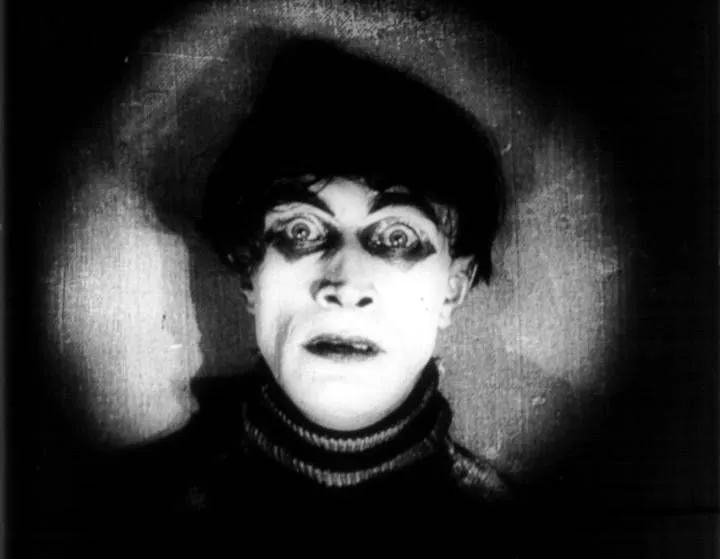
Stylized Mise en Scene; It rejects realism in favour of extreme distortion used to communicate inner emotional reality. Heavy stylization is symbolic of the real world rather than a realistic depiction of it.

  • Distorted shapes and lines that upset the sense of balance.
  • Suggests a warped and perverted perspective on the world.
  • A reflection of the twisted emotional state of the storyteller.

Lighting: Chiaroscuro lighting creates dramatic contrasts between light and shadow, suggesting presence of dark aspects in human nature. Elongated shadows envelope and haunt the characters. Shadows are also used to reveal characters actions, suggesting their dark intent.

Make Up & Performance: Gothic make up and clothing and exaggerated movements as further distortions of reality, suggesting ill psychological states.

Integrated Aesthetic: Movements carefully choreographed to create specific shapes and shadows. Integrated with mise-en-scene to create an overall graphic composition.

Influence on Subsequent Film Makers:

  • Universal Studios Horror
  • 1930s and 1940s
  • Influence of German directors escaping Nazism, e.g.; Frankenstein
  • Film Noir Genre
  • 1940s and 1950s, e.g. The Big Hear
  • Has influenced movies such as Edward Scissorhands by Tim Burton 1991.

Postmordenism & Hyperreality

Postmodernism- an artistic philosophy which revolves around distrusting theories/ideologies and drawing attention to conventions- a rejection of any notion of objective truth.

It is about 2 things:

  1. Recognising that everything is constructed; nothing is real, we can play with it.
  2. Recognising that we all see the world in different ways- different ways to read a text- polysemy.

Jean- Francois Lyotard defined the postmodernism condition as one- faith in master narratives and claims to a universal truth are lost. The’ postmodernism condition’ is an ‘incredulity towards meta-narratives’- distrust of universal theories of knowledge. The postmodern condition is an “incredulity towards meta-narratives- distrust of universal theories of knowledge.

Jean Baudrillard stated we live in a world in we’re constantly bombarded with signs and information. He wrote the book, Simulacra and Simulation in 1985 to explain key aspects of post-modernism; the blurring boundaries. Mainly with what is real and what is a simulation of reality- simulacra. Baudrillard stated that the border between reality and its representation has collapsed into what he calls ‘simulacrum’. We do not experience the real world but only the world we see in media texts (‘implosion’).  This means that these mediated signs become more real for us than reality itself. Indeed, Simulacrum can be described as a copy without an original. Reality has been replaced by a hyperreality in which we cannot distinguish signs from what they are supposed to represent – we cannot distinguish reality from a simulation of reality.

An example of hyperreality texts are when Christmas adverts on TV or the publicity material for Paris or Disney Land look better than the real thing. A magazine will use Photoshop to manipulate someone’s image (removing blemishes etc.) but still present the photo as ‘real’. For the audience, the image/simulation of the star seems more real because we have never met the star.

Mediation- when media takes something which is real and represents it in a particular way. We understand our reality through the mirror of media. Postmodernists question the representation of history, reality and cultural identities – they seek to challenge who/what is represented, by whom, from what ideological point of view.

Reflexivity & Self- consciousness- the media text is aware of the fact that it is a text. Therefore, a lot of postmodern texts play with their own status as constructed texts. They play with their own conventions, boarders and realities and reference itself and its characters.

Fragmentation and discontinuity- when texts are constructed, their boundaries and structures can be broken up and redistributed. Storylines and characterisations are broken up, disturbed and don’t follow the usual pattern.

Pastiche- a copy of something which is intended to be a tribute to the original text.

Parody- a copy or thinly version of something that makes fun of the original.

Irony- When a piece of art or literature is self- consciously doing the opposite of what it appears to be doing.

Kitsch-produced in mass- usually tacky, sentimental and cheap.

Bricolage- When smaller fragments are stitched together to make a larger whole. It’s a collection of images and ideas; to make a new piece of art or literature.

Marxism in Media- Cheat Sheet

IDEOLOGY-   rules or doctrines which govern the way we behave (norms and values). this is a set of commonly held beliefs and ideals within a given culture. Whilst these ideologies change from various cultures and shift over time, there is usually a media representative/star that embodies these ideologies. The star can embody these behaviours, aesthetics and ideologies. In return, this also influences the audience how to they should behave, how to dress and how to think. For example, through magazines, music videos, films, television shows will all communicate the common ideologies of the culture.

Dominant Ideology– Ideology that is believed by the majority of the population.

Alternative Ideology- different viewpoint- alternative to the dominant ideology.

Capitalism- economic system in which people are driven to produce goods and services for a profit.

Marxism- this is the belief that leads to the oppression of workers. The rich get richer but by exploiting the hard labour of the poor.

KARL MARX:

Image result for karl marxKarl Marx and Friedrich Engels (German immigrants living in Britain) developed Marxism in the early to mid-19th century. For Marxists, Capitalism (through ideology and force) leads to oppression and exploitation of proletariat (majority/working classes- anyone who sells their labour for money) by the bourgeoisie (wealthy ruling class who own the means of production/minority.

Commodities (objects we buy and sell) always represent the exploitation of the workers who produced who have produced the, because the price at which they are sold is always higher than production costs- the difference between the amount it costs to produce something and the price at which it’s sold is the producers profit. According to Marxists terms, this profit is a direct measurement of the degree to which workers labour has been expired.

Marxism calls for proletarian revolution- workers across the world should unite against their employers- the ruling classes, who oppressed them.

Coercive State Apparatus – physically forcing you to accept the status quo- not allowed to be resistant.

Ideological State Apparatus- sending out messages that make you think the current status quo is acceptable- no need to resist.

The media hold lies, deception and misinformation to the working classes to keep them in a state of false consciousness.

False consciousness- preventing them from seeing their true situation and oppression. It is this idea that stops the proletariat from rising up and seizing power from the bourgeoisie.


Antonio Gramsci

Image result for antonio gramsci

Antonio Gramsci was an Italian political theorist who is renowned for his concept of cultural hegemony. His theory stated that the culture industries, including the media can be used as a means of social control to ensure the ruling classes maintain their power. This theory claims that through media, the ideas of the ruling class are seen as the norm; they are universal beliefs that benefit everyone, whilst only really benefiting the ruling class.

Theodor Adorno

Image result for theodor adorno

Adorno was an advocate of the argument that popular media keeps the population passive. It ensures that capitalism continues at the expense of true happiness. Adorno believed that cultural products offer simple and direct pleasures and we crave these unchallenging products because they seem to validate our lives (which are all bland and standardised). We feel alienated by dull, repetitive and undemanding tasks but this is relieved by dull, repetitive and undemanding media texts/practices, like pop music and dancing.

These theories also link to The Hypodermic Syringe Theory, 2 Step Flow Model and the Cultural Effects model.

Louis Althusser

Image result for louis althusser

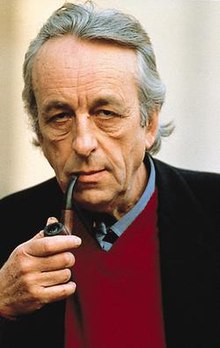
Althusser’s idea of ‘interpellation’ (1970) suggests that the ruling class send out messages in media that support their authority and unequal power relations. When watching these texts, the viewer becomes absorbed into their world view and beliefs (‘interpellation’). The viewer accepts their position in society and they also accept their status – being dominated by the ideas of the ruling class.

As such, our identities and position in society is partly created by the dominant messages we see in media.

For example, in a world in which power is skewed in favour of men (patriarchy), men are the ruling class.  Men then send out messages in media that make women think male dominance is normal and natural. In turn, men oppress women who accept it as they think they have a lower status.

The Auteur Theory

Auteur is the French word for “author”- the word used for the “author” of the story (the filmmaker). Filmmakers have recognisable visual style in their films. Therefore, you would know when it is one of their films. Some filmmakers work in many different forms and styles such as Brian De Palma and Takashi Miike, but others have more identifiable styles. For example, Alfred Hitchcock, Martin Scorsese, Quentin Tarantino, Wong Kar-Wai all have their own distinct style that is easily recognizable.

The problem with this is that there cannot really be one single author for a film as they are more collaborative projects- more people are involved such as cinematographer, set designers, actors, etc. However, generally the director is the person who would fit into the auteur status as they are the ones who have the most control over the film. But it could be a writer like William Castle or Val Lewton who made a series of low budget horror films in the 1940’s.

WILLIAM CASTLE: director, producer and overall showman.

Castle had a unique way of getting to his audience when presenting his film to them. For example, at his 1959 film, ‘The Tingler’ he brought hundreds of little electric motors at $3 each and sent them to cinema theatres and told them to put them under their seats. So, at some points during the film, the motors would go off, sending mini bolts of electricity through the audience- and they just accepted this without complaining. Electrocuting his audience was mild compared to some of the other ways he would manipulate them.

He would appear at the beginning of the films to warn the audience of the terror that they were about to receive. He took our insurance policies against people dying from fright during his film ‘Macabre’ (1958). All of this was a deliberate attempt to put the audience into a frame of mind in which they were already unnerved and disconcerted before even watching the film.

The auteur theory became a method of evaluation which enabled people knowledgeable about film, film history and individual directors to show their knowledge and superiority over the uneducated masses. Those who did not know what John Ford’s cavalry trilogy was or the importance of cigarette lighting in the films of Howard Hawks.

  • In 1951, Andre Bazin founded ‘Cahiers du cinema’. He is often seen as the father of auteurism because of his appreciation of the world-view and style such artists as Charlie Chaplin and Jean Renoir. Younger critics at the magazine were the ones who developed the idea further, drawing attention to significant directors from the Hollywood studio era as well as European directors.

François Truffaut was one such critic. He was someone who became one of the greatest filmmakers of the French New Wave. Truffaut created the phrase ‘politique des auteurs’ to refer to the policy of venerating (treating with great respect and honour) directors.

  • The French critics were responding to the belated influx of American films in France after World War II- they had been previously held back by import restrictions. Therefore, directors like Howard Hawks, Alfred Hitchcock and John Ford were hailed as major artist of cinema.
  • Critics like Truffaut was aware that American filmmakers were working within the restrictions of the Hollywood system and that the types of films were often decided for them by studio executives.
  • However, they believed that such artists could still achieve a personal style in the way that they shot a film.

EXAMPLE: STEVEN SPIELBERG

Steven Spielberg has a great history of filmmaking is quite a reputable example of an auteur. He is mainly known for his Jurassic Park films; however, you will find the same filming techniques in a lot of his other work.

These include:

  • The supernatural among the normal– his films always include creatures that do not necessarily exist, such as prehistoric creatures such as megalodons, dinosaurs, giants, aliens, etc.
  • The Spielberg face– the character reacting to something off camera with a shocked expression on their face.
  • Ordinary people in extraordinary circumstances– the events in the movie feel even more momentous due to that fact that the people stuck in them have never experienced anything like it before- making the audience feel like it could be them in that situation too.
  • Emphasis on childhood– the adults are out of touch with what really matters. For example, In ET, no adult faces are seen besides Elliot’s mother until the end of the film. The children always seem to be the ones stuck in the extreme circumstances whereas the adults remain oblivious.
  • Reflection shot- it is theorised that Stevens often used reflection shot could be a ways for the characters to visual symbolise their own self-reflection.

Therefore, whenever we see these common traits in a movie- it is often tied to Steven Spielberg as he never seems to lose touch with his filmmaking traits.

With this auteurist approach, the French critics showed their appreciation of the Hollywood films that they loved.

However, the auteur soon gained recognition in America in the 1960’s through Andrew Sarris. He devised the notion of auteur theory (the French critics had not claimed the concept to be a ‘theory’) and used it to tell the history of American filmmaking through the careers and works of individuals. But Hollywood was wary of the idea that it produced art and not entertainment, therefore many Hollywood directors rejected the notion completely. They saw themselves as people who just made movies; they were craftsmen or hired hands, part of the production line.

Sarris’s approach led to the formation of a canon of great directors and, consequently, some filmmakers like Alfred Hitchcock cultivated their persona. Hitchcock was seen as the star of his own films; also known as the “master of suspense”.

This did have a negative impact on the people he worked with. According to biographer Donald Spoto in a book of interviews with Truffaut, Hitchcock hurt and disappointed just about everybody who had ever worked with him because the interviews diminished the contribution of the writers, the designers, the photographers, the composers, and the actors. These people became little more than elves in the master carpenter’s workshop.

Today, auteurism is not limited to filmmakers but can also be linked to actors. Because of todays marketing campaigns which heavily promote the stars of the film, more auteuristic than they ever were. The key things is the recognisable imprint that is left on a film.

Problem with the Theory:

  • It might even be possible for a director to personally carry out every aspect of the production. If the director doesn’t fulfil all production functions- the ‘author’ of a film really identified and established?
  • Film is collaborative- each person working on it also brings their own creative elements- not just the director.
  • The auteur theorists weren’t interested in the historical context of the film- but the context of film within the total body of the directors’ work. It wasn’t known if the films related to the others made by the director.
  • The auteur theory isolates films from their social and historical contexts from audiences- it treats filmmakers as being beyond time and being untouched by society or the industry that surrounds them.

Narrative Structure

Narrative Structure- Structure frames, gives context and makes a storyline comprehensible- which is why it is always completely vital. Narrative can trace its history back to the ancient Greeks. Greek drama had 5 five acts, each act would end with a chorus that would come onto the stage, replacing the actors and sing:

ACT ONE: Exposition- Laying out the story.

ACT TWO: Development- The story begins.

ACT THREE: Climax- In a love story, the loves consummate.

ACT FOUR: Denouement- Unravelling of the story.

ACT FIVE: Catharsis- Purging / Resolution.

Giovanni Boccaccio altered this structure. The Italian writer of De Cameron of the 12th and 13th century. He introduced into his narratives, the idea of a turning point or a twist in the story. The turning points were the most vital component of the narrative to keep the audience’s attention. However, this became simplified over time and along with works like Geoffrey Chaucer’s ‘The Canterbury Tales’ in 1475, this led to the developed of a straight, linear story containing surprise and intrigue which the audience could follow. Therefore, this led to the Three Act Structure:

  • Act One – Set up (Exposition)
  • Act Two- Development (Launch point/ crisis moment)
  • Act Three– Resolution (Pay Off)

An example of the three-act structure can be seen in the film, ‘The Great Gatsby’.

ACT 1- Set Up:

Image result for the great gatsby movie

Image result for jay gatsby

The film starts with an unknown narrator; however, we find out that this narrator is Nick Carraway, a former war veteran and current writer who is being treated in a mental hospital. While talking to his therapist, he starts reflecting on his friendship with Jay Gatsby, his extremely wealthy next-door neighbour. He has a suspicious past and an illegal access to alcohol. However, Nick finds out that his cousin, Daisy Buchanan (who has now married a wealthy Yale graduate, Tom Buchanan) a part of Jay’s mysterious past. The story begins to unfold more as we find out more about Jay and how he came to know Daisy and how he achieved all his wealth. At the end of the first act, Nick arranges tea at his house with Jay and Daisy- which is their first time meeting in 5 years.

ACT 2- DEVELOPMENT

Within the development stage of the structure, Daisy and Jay restart their love affair and it is . Daisy’s husband starts to become increasingly concerned, despite having a mistress himself. Jay wants Daisy to leave Tom so that they can start their own life together. Daisy is hesitant. However, once Tom does more digging into Jay, he finds out that he is actually a bootlegger; he got all of his money from selling illegal goods.

ACT 3- RESOLUTION

Daisy returns to Tom, as he is old money and Jay is new money- Daisy being wealthy herself, it would be odd for her to marry out of her societal status. After Jay and Tom break out into an argument, Daisy and Jay leave, Daisy driving Jay’s car. On they way home, Daisy accidently hits Toms mistress. The mistress’s husband is out to get his revenge as he believed that Jay was the one responsible for her death, therefore, he ends up shooting and killing Gatsby. Daisy and Tom leave with their children to the West. This finally leaves Nick on his own, to piece everything together and write a book about it.


This type of structure works for film and theatre. However, when it comes to TV, it tends to be broken up into 4 acts, mainly for advertising. TV episodes are usually cut up into 4 separate parts due to adverts in-between. Therefore, each ending before the break needs to be enticing enough for the audience to come back and watch the rest. Therefore, it does this by building up action and then leaving it on a cliff-hanger.

 TYPES OF NARRATIVE

Linear- this is a chronological storyline. It is the most common, simple and organised. Linear narrative avoids flashbacks and dreams and predictable/archetypical (most original sense of the problem). The most common genres this storyline is suited to would be: children, factual, classic.

Single strand- This is one set story-line. It focuses on a single person/ hero and their story, there are  no group or team, however, secondary characters are allowed.

Nonlinear- There is no specific order to the story. It’s  fractured, altered, intensified and is used to  create a sense of instability. The  whole truth is unknown and there is no chronological order/less linear. The story-line is often back and forth in time and or characters POV.

Multi strand- This follows several story-lines in one overall story. There are different types of people  within the story and it focuses on each character’s individuals propose to the moral, goof for sequels, series, documentaries.

Circulatory (circular) narrative structure- the narrative starts where the story would usually finish. We see flashbacks to see how they got there to end the episode where it started.

TZVETAN TODOROV

Todorov suggested that every narrative has a similar structural model:

Equilibrium– knows as the ‘norm’ or status quo.

Disruption – (Event) something happens to disrupt the norm.

Realisation- when the characters realise that there’s a problem.

Repair- an attempt to fix the problem.

Resolution- the problem is fixed, and the equilibrium is restored.

EXAMPLE: The Hunger Games (2012)

Image result for katniss everdeen

Equilibrium-

The protagonist, Katniss Everdeen, a teenage girl living in her District with her mother and younger sister, Primrose. In the beginning of the film, she is seen practicing with her bow and arrow- in case she is ever chosen to participate in the Hunger Games.

Image result for katniss everdeen volunteer

Disruption: The disruption takes place when Primrose’s name is pulled from the box at the hearing and she is chosen to represent their District in the Hunger Games. To prevent this from happening, Katniss sacrifices herself as tribute instead of her sister. This shows that Katniss is willing to sacrifice her own life for her sister.

Image result for katniss saying goodbye to primrose

Realisation: Katniss realises the situation she is now in. She is aware that she may not see her family or fiends again and the most upsetting part is when she has to say goodbye to her sister, therefore she promises her sister that she will try to win the games for her.

Image result for katniss and rue

Repair: Katniss is now ensuring that she will do everything she can in order to stay alive, despite all the difficulties she is surrounded by. For example, a friend named Rue she made while participating in the games gets killed, which makes her even more determined to win the games.

Image result for katniss and peeta first movie

Resolution: At the end of the story, Katniss and her companion Peeta in the games together. She then returns home to her family.

Claude Levi- Strauss

Characters are more than simply entertaining- they are the carrier of the story’s themes. The theme is the filmmakers moral idea about how people should live- it is as the core of the character. The idea or principle dictates the character’s internal logic- their motives, beliefs, behaviours, and crucially the choices that they make.

Binary oppositions – The films theme is most clearly illustrated through the conflict between the protagonist and antagonist.

Strauss was interested in exposing the structures that myths and fairy tales most commonly used.  To disrupt order on to a chaotic world, a myth may set up a binary opposition (opposing ideals in a narrative that create conflict and tension) but then resolve the narrative in a way which favours one over another; for example, good triumphing over evil or altruism over selfishness.

EXAMPLE: Spider-Man (2002)

Image result for spiderman movie 2002

Opposite 1- Spiderman is the protagonist- he is seen as the hero and is very clearly presented as one with his costumes safer/ stronger appearance.
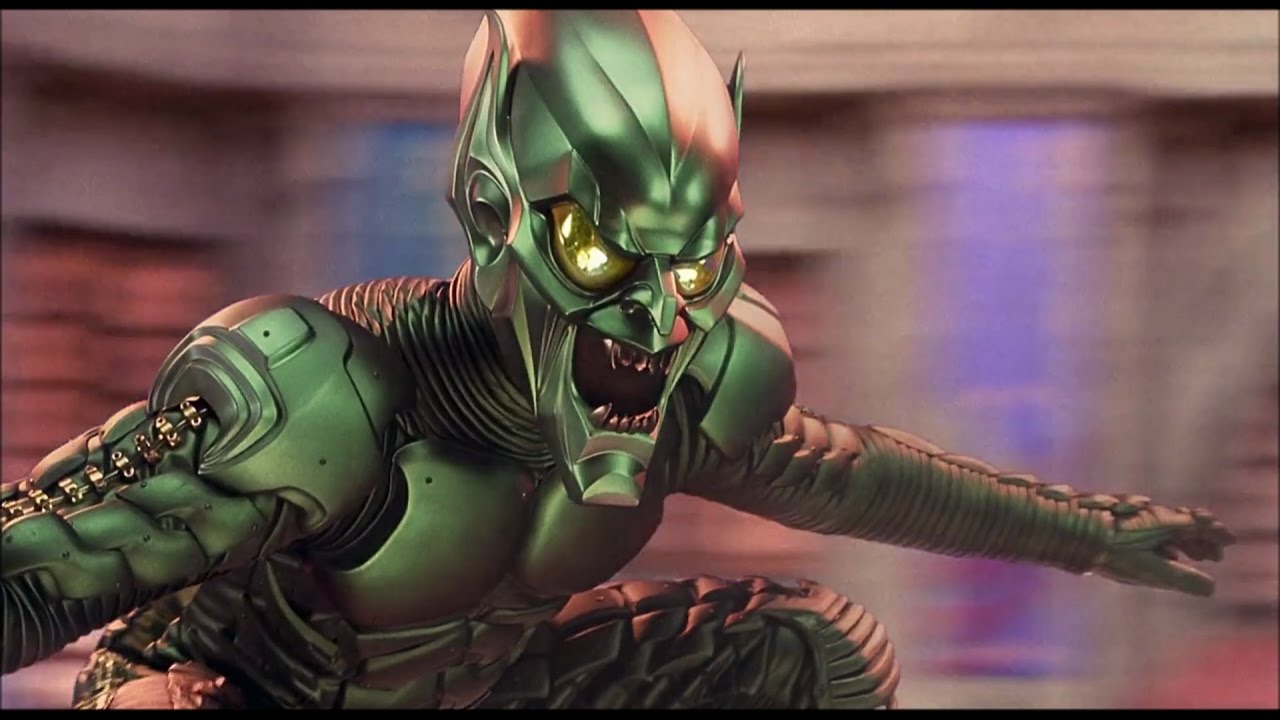
Image result for spiderman movie 2002

Opposite 2– The Green Goblin is the villain in this story. His evil/scary appearance portrays that he is rebellious and means more harm rather than good.

This is typical to see in an action movie as there is always a hero and a villain.

Christopher Volger & his Hero’s Journey

According to Volger, the hero’s story in always a journey, which can be external or internal. They exit their comfort of their home and what they know and venture into a world with challenging aspects.

Vogler-Campbell- Hero’s Journey:

  1. Ordinary World- the hero is seen in their everyday life.
  2. The Call to Adventure- The initiating incident.
  3. Refusal of the Call- the hero experiences hesitation.
  4. Meeting with the Mentor- The hero gains supplies, knowledge and confidence needed to commence the adventure.
  5. Crossing the Threshold- the hero commits fully to the adventure.
  6. Tests, Allies and Enemies- the hero explores the special world, faces trail and makes friends and enemies.
  7. Approach to the Innermost Cave- the hero nears the centre of the story and special world.
  8. Ordeal- the hero faces the greatest challenge yet.
  9. The Reward
  10. Road Back- the hero returns to the ordinary world or continues to an ultimate destination.
  11. Resurrection- hero experiences the final moment of death and rebirth so they are pure when they re-enter the normal world.
  12. Return with the Elixir- hero returns with something to improve to the ordinary world.

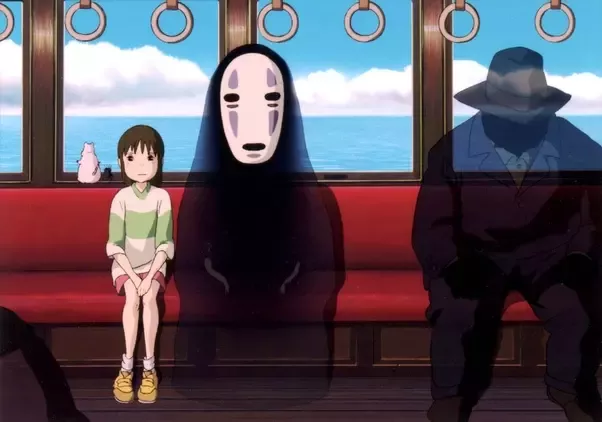
EXAMPLE: SPIRITED AWAY

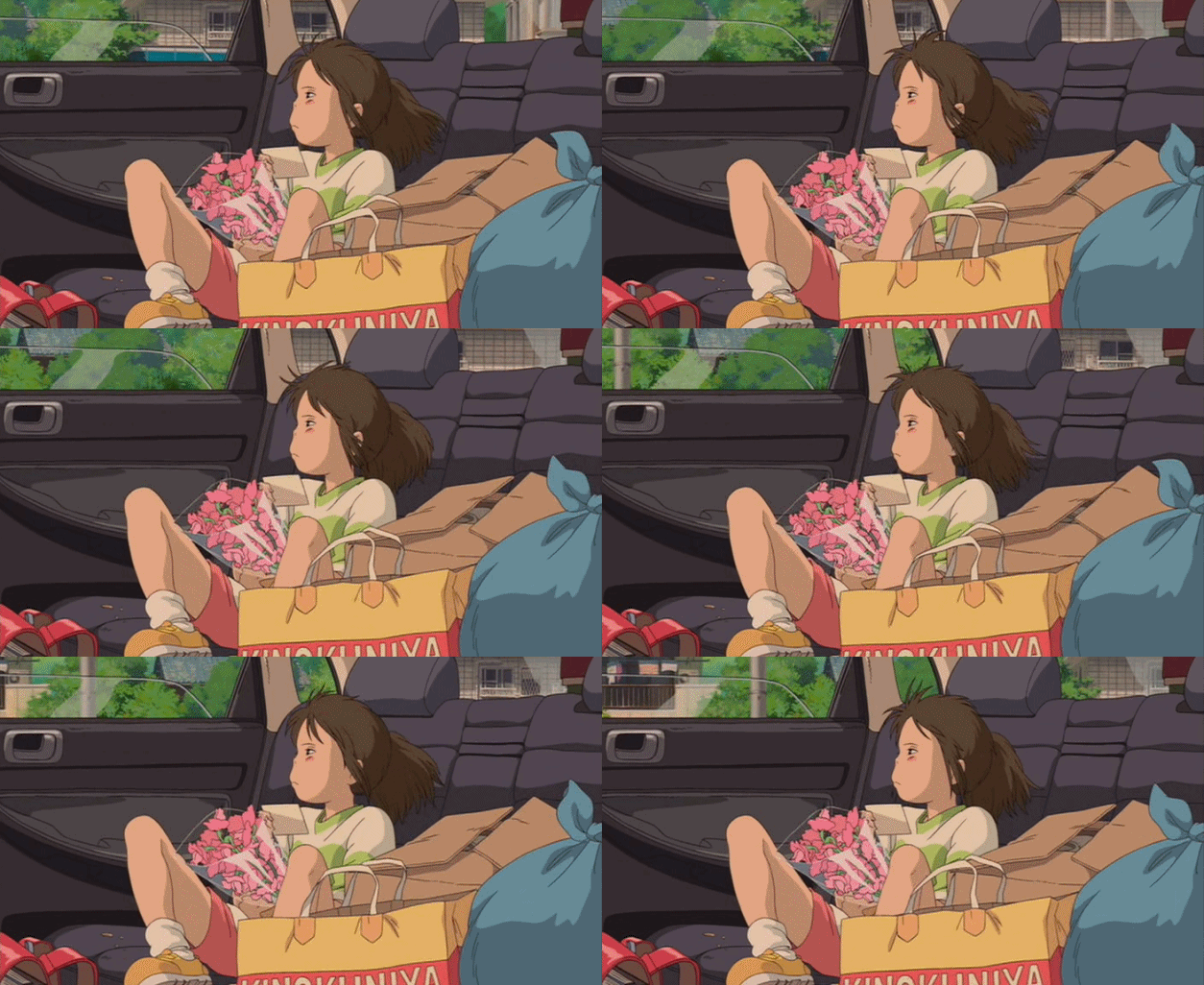
  1. Ordinary world- The movie begins with Chihiro sulking in the car on the way to her new home. She is upset about her leaving her friends and old life. She appears to be unenthusiastic.Related image
  2. The call to adventure- While on the way their way to their new house, Chihiro and her family get lost ad come across an old abandoned theme park. They decide to explore- however this only leads them to an odd town with no people, but it does however display food.Image result for spirited away theme park
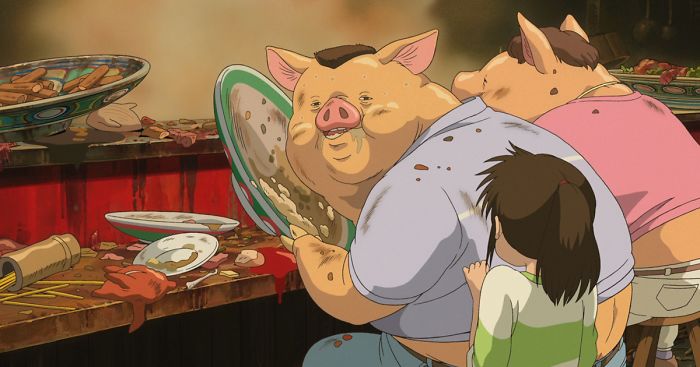
  3. Refusal of the call- Chihiro is hesitant and unsure about the theme park and is the only one who finds it strange that they are alone. However, her parents are too intrigued by the food and start devouring everything on display, but Chihiro does not share the same interest in the food. Her instincts turn out to be true when her parents turn into pigs while eating.Image result for spirited away pigs
  4. Meeting with the mentor- Feeling scared, Chihiro runs away from the pigs. She then meets Haku, he warns her to leave the spirit world before the sun sets, but her way back is blocked by a newly formed lake. Haku gives her a magical berry that stops her from vanishing.Image result for chihiro meeting haku
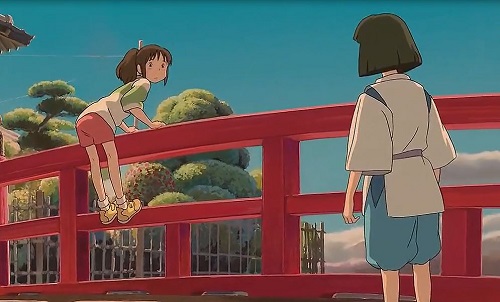
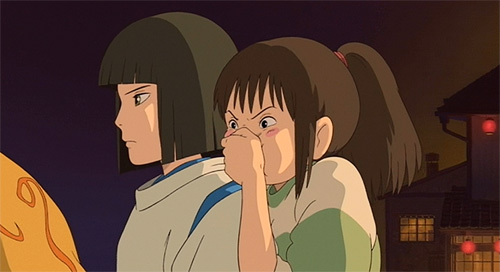
  5. Crossing the threshold- Now that she has recognised that she is trapped, Haku helps Chihiro cross the bridge to the bathhouse, in order to stay hidden, she has to hold her breath while she crosses.Image result for chihiro crossing the bridge
  6. Tests, allies and enemies- Chihiro goes to the boiler room and meets Kamaji and Lin. She tells them how much she wants to work to earn a safe place in the spirit world. They tell her to meet the evil head of the bathhouse, Yubaba, to get a job. Yubaba changes her name to Sen and sends her off to work with Lin.Image result for spirited away lin and chihiroImage result for spirited away yubaba
  7. Approach to the Innermost Cave- Sen begins work at the bathhouse. One day, she meets a strange spirit that no one else notices. When she lets him in, he creates a mess by giving out gold to everyone and eating employees. Sen later manages to calm him down but he continues to follow as a friendly/helpful shadow.Image result for spirited away no face
  8. Ordeal- Sen sees a dragon being attacked by paper shikigami and realises that its actually Haku. She follows him all the way through to Yubaba’s chambers. Her son notices them and makes their presence known. They leave buy Haku is still stick. Sen cures Haku by giving him the remnants of the stink spirit she once attended to at the bathhouse. Image result for haku paper birds
  9. The Reward- Sen and Haku go to the house of Zeniba, Yababa’s twin sister to return the stolen magic seal. Zeniba helps Sen remember her true name- Chihiro- which she can use to free herself from Yubaba. On the way back, Chihiro also remembers Haku’s real name-Nigihayami Kohakunushi. Haku finally gains his freedom from Yubaba’s control. Chihiro confronts Yubaba, who tells her if she can recognize her parents from all the pigs, she can leave and have her real name back.Image result for spirited away no faceImage result for spirited away zeniba
  10. Road back- Chiro is told her parents are waiting her back where she originally came. Haku comforts Chihiro, reminding her that he is free and that they will meet again- warning her not to look back.Related image
  11. Resurrection- Chihiro sees her parents again, they scold her, unaware of her whereabouts, clearly not remembering anything from the spirit world. The proceed back to their car, Chihiro is hesitant and is about to turn back, but she decides against it and leaves.Image result for spirited away end
  12. Return with the elixir- Chihiro is back in the car, feeling hopeful and ready to start her new life as she is stronger now than she ever has been.

 Vladimir Propp- Functions and Characters:

The Hero: a character that seeks something, they drive the story and narrative. They can be either a quest narrative or a mystery/enigma-

Related image

Example- Katniss Everdeen- she starts a revolution to the help the victims of the villain.

The Villain: who opposes or actively blocks the hero’s quest, they try to get in the hero’s way.
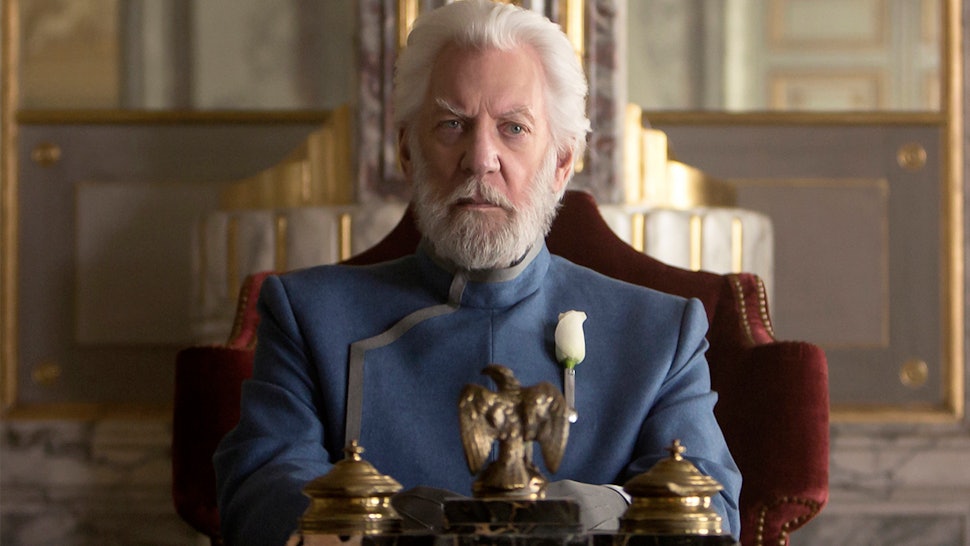
Image result for president snow

Example- President Snow- he is the one responsible for the Hunger Games. He does not care about people getting hurt or dying because he believes that people are a threat to him.

The Donor: who provides something to help the hero.
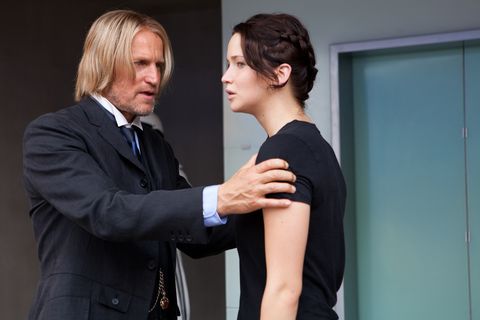
Image result for haymitch

Example- Haymitch- he provides Katniss with things that can help her and Peeta win the competition

The Dispatcher: who sends the hero on his/her quest

Example- President Snow- he sends the tributes into the Games.

The Helper: who aids the hero (a sidekick)

Image result for peeta mellark

Example- Peeta- he acts as a helper to Katniss by joinig her in the Hunger Games.

The Princess: the reward for the hero (this can be a person or an object)
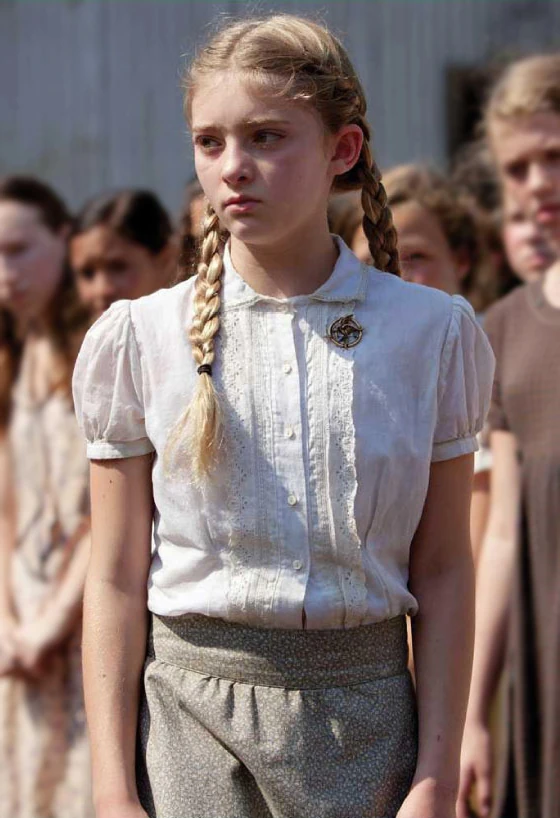
Image result for primrose everdeen

Example- Primrose Everdeen- Katniss sacrifices herself for her sister, by her staying alive, it is a reward for Katniss.

The Father: an authority figure who rewards the hero for completing the journey

The False Hero: someone who appears good but is not (they betray the hero)

One character could perform a number of these functions, furthermore these functions can often be metaphorical instead of literal.
 

Psychoanalysis & Sigmund Freud


Psychoanalysis is an attempt to understand the ways in which we are unconsciously/subconsciously motivated to act in a certain way- it’s aims to discover why humans do what they do and what is lurking deep within the unconscious human mind.

Why is Psychoanalysis significant?

  • This concept was originally developed by Sigmund Freud, however, many academics apply it today through the work of Jacques Lacan.
  • According to Lancian’s model, the self is created by differentiating itself from the surround world. This was also called the ‘mirror stage’ by Lacan, as it is through the reflected image that the infant first starts to see themselves different to their surroundings.
  • Film and media provide mirrors that help individuals to understand who they are and what their place in the world is.

For those who apply a Lacanian approach (or other psychoanalytic approaches), the viewer is seen as attempting to discover who they are through the text. This is one of the reasons why feminist film theory often draws upon psychoanalysis; the text shapes who we are along with how we see ourselves and others.

Freud:

Freud was the original founder of psychoanalysis and others have built upon his work and theories. He believed that dreams had meanings and that they could be interpreted; meaning they revealed something important about what was going on in our brain.

He stated that we were driven by a “pleasure principle”- we become well-adjusted adults. However, if it is repressed too much, we develop neuroses.

Freud came up with the idea that our minds have 3 parts which are constant conflict:

  • ID (driven by the ‘pleasure principle’). This is our animalistic self who just wants easy gratification
  • The Ego
  • The Superego (driven by a need to follow the rules). This is our supreme self – rational, logical and intelligent

The Virgin Whore Dichotomy

Freud stated that men were unable to find a woman sexually attractive when they demonstrated traits associated with being good. However, they were unable to trust women who demonstrated traits associated with being bad. This theory was based upon Freud’s 1916 theory, ‘The Madonna/Whore Complex.

This put men in a position of anxiety and therefore meant women were forced dto adopt either the Madonna or the Whore persona but not both.

  • Where such men love they have no desire and where they desire they cannot love” (Sigmund Freud, 1916)
  • The virgin/whore dichotomy has built this original theory to extended to popular culture studies and analysis. Females in popular culture are often seen as having to adopt either the virgin or the whore persona in order to be successful and are unable to have both personalities simultaneously. But often society rewards the virgin and punishes the whore. Women learn that, in order to succeed, they need to be pure and chaste (containing female sexuality and independence).

 The Oedipal/ Oedipus Complex

  • This theory states that we prefer one parent over the other- this is based upon the Greek tragedy of Oedipus who accidently killed his father and marries his mother without knowing at the time, they are his parents.
  • It largely concerns male children who are completely dependent on their mother – the mother is the child’s entire world. She feeds the child, protects them and nurtures them.

However, the infant fears that the father might come between him and the mother and so wants him gone. The baby wants to remove the threat posed by the father in order to be solely with the mother.


Furthermore, the infant becomes aware that, later in life, he will have a companion much like their mother. This sexual confusion creates anxiety and panic in the child which they take with them for the rest of their lives. Sometimes, the female child is the one who resents the mother because of the relationship they have with the father.

Carl Jung called this Electra Complex for females, but Sigmund Freud called it Oedipal Complex for both. The theory has been developed to suggest that men get ‘womb envy’ and women get ‘penis envy’.

These issues are often in films, not literally but symbolically. For example, the male character might become obsessive of female characters who represent a matriarchal figure, or they resent other male characters who represent patriarchal figures. For females, it is portrayed as a female character becoming obsessive over a patriarchal male character and resenting matriarchal female characters (The Oedipal/Oedipus Complex).

Genre

Image result for genre

Genre is term that Glen Creeber, Jane Feuer and Steve Neale all pointed out, is a French word, meaning ‘type’ or ‘kind’ and emerged following the 19th century’s mass production of art- mainly literature. They stated that “genre studies can be broken down into different ‘types’ or ‘kinds’, i.e. a group of texts can be linked together by similar generic characteristics” (Creeper, 2004, p.78).

Overall, genre functions by organising and categorising texts within a framework of bounded rules.

Narrative-similar plots and structures with predictable sequences, situations, obstacles, conflicts and resolutions.

Stock Characters- similar types of characters (sometimes stereotypical) roles, personal qualities, motivations, goals and behaviour.

Setting and Location- geographical and historical.

Iconographya familiar stock of images or motifs.  Primarily but not necessarily visual, including décor, costume and objects, certain ‘typecast’ performers (some of whom may have become ‘icons’), familiar patterns of dialogue, characteristic music and sounds.

Filmic Techniques- Stylistic or formal conventions of camerawork, lighting, sound recording, use of colour, editing, etc. (views are often less conscious of these conventions than those relating to content.

As genres rely on the audiences’ understanding of codes and conventions, the over-usage these codes create the risk of the content becoming predictable. However, saying this, going too far off the expected codes and conventions could cause audience dissatisfaction as the text doesn’t fulfil the generic expectations. Therefore, media producers have to balance ‘repetition and difference’ (Neale).

This might suggest that every text that is created can easily be fit into a genre, however this is not the case, most of the time, many texts can fit into sub-genre’s.

For example within the comedy genre- there can be various types:

  • Romantic Comedy
  • Examples: Roman Holiday, When Harry Met Sally, Love, Rosie
  • Anarchic Comedy
  • Examples: Monty Python and the Holy Grail, Blazing Saddles, Animal House.
  • Action-Comedy
  • Examples: Beverly Hills Cop, Rush Hour, Hot Fuzz.
  • Black-Comedy
  • Examples: Fargo, Harold and Maude, Dr. Strangelove or: How I Learned to Stop Worrying and Love the Bomb.
  • Horror-Comedy
  • Examples: Beetlejuice, Zombieland, Shaun of the Dead.
  • Dramedy
  • Examples: Little Miss Sunshine, The Royal Tenenbaums, Lost in Translation.
  • Parody/Spoof
  • Examples: Life of Brian, Naked Gun, Scary Movie.

Each one of these genres has a whole host of codes and conventions of their own. For example, a romantic comedy has a softer, more pleasant approach, whereas an action-comedy will include more violence but use comedic relief to make the scenes less tense/ vulgar.

Fixed genres:  while these genres might change slightly over time, they are considered to be fixed because they remain fully true to the codes and conventions This is because of

  • Cultural Significance (tradition)
  • Relationships to history/ historical events.

Non-fixed Genres: Most genres do change over time. Film like all art, reflects and negotiates the real world. As such, the genre texts shift with shifts in culture.

Hybrid Genres: These are texts that deliberately mix the codes and conventions of more than one genre. For example, Peaky Blinders contains a broad mixture of crime, mystery, drama, action, romance, etc. This means that there is a broader spectrum of viewing pleasures for the audience.

Genres are never static but are always going through a constant cycle.

Stage 1: Experimental Stage

  • The conventions of a genre are defined and established. For example, horror films in the 20’s and 30’s all cantered around monsters and set up traditions such as narrative or makeup.

Stage 2: Classical Stage

  • One the conventions have been established; they are cemented through repetition. For example, horror films develop similar storylines, ways of shooting, use of actors, characters and visual similarities.

Stage 3: Refinement Stage:

  • Here, genres need to adapt because audiences become familiar with it. For example, it’s no longer the monster that are scary, but the new mysterious neighbour. New extreme methods need to be used to create shock.

Stage 4: Self-referential Stage:

  • Audience familiarity with conventions make it almost impossible to do it ‘straight’. Therefore, parody and deconstruction become common. For example, Scream or Cabin in the Woods.

No Genre/ Anti-genre:

Some media texts cannot be categorised because they do not follow any obvious conventions. Genre relies on multiple texts to follow the conventions. If there is only one example, it is yet to be put into a genre.